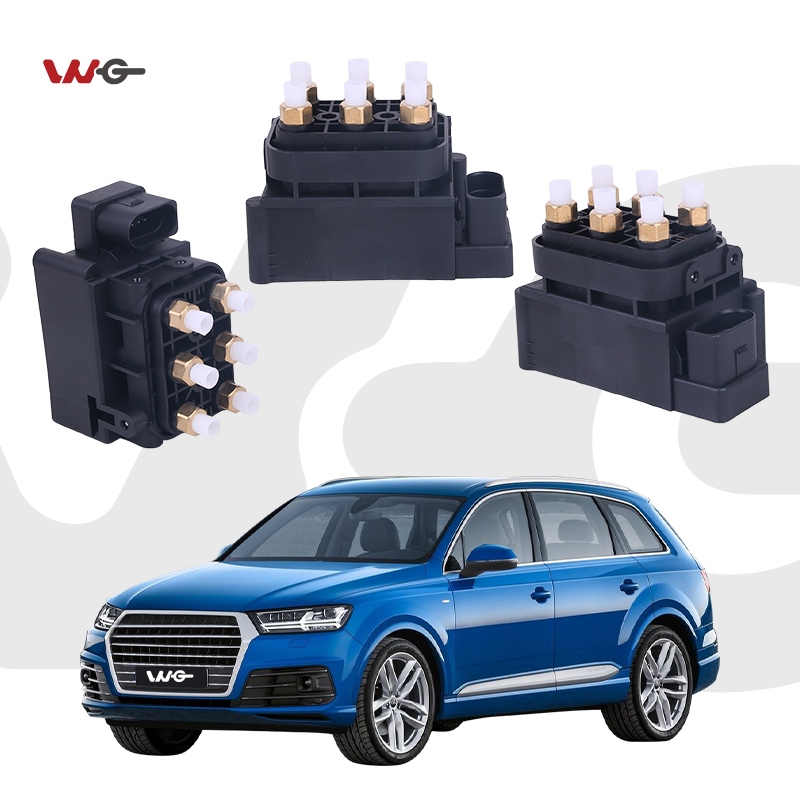
An air suspension valve block controls the airflow to and from the air suspension compressor, air reservoir, and the specific air spring or air strut. In the event that the air suspension valve block has an internal or external air leak, or the solenoid valve fails to operate correctly due to electrical issues, the following problems may arise: inconsistent ride height, sluggish height adjustment, increased compressor activity, or suspension error messages. The selection of the right air suspension valve block will require determining its OE part number, vehicle compatibility, pneumatic fittings, electrical plug, and mounting system.
The air suspension valve block is very important in electronically controlled air suspension systems because of the regulation of air pressure and air flow and also maintenance of ride height and compressor cycle rate. This is because the air suspension valve block works effectively if the air suspension components are all working properly.
What an Air Suspension Valve Block Does
Air Distribution Inside the Suspension System
The air suspension valve block serves as a pneumatic distribution and control component within the suspension system. It routes compressed air between the compressor, air reservoir, and individual air spring or air strut circuits according to the vehicle’s suspension control strategy. A typical electronically controlled air suspension valve block contains multiple solenoid valves that control individual air spring circuits and, depending on the system design, the valve block may also control the connection to the air reservoir and exhaust circuit. Some vehicle-specific valve block assemblies may also incorporate a pressure sensor or additional pneumatic control components. The suspension control module commands the solenoids based on inputs from ride-height sensors and system pressure information.
Depending on the vehicle application, a valve block may use a metal or engineering-polymer housing with pneumatic ports, solenoid valves, electrical connectors, seals, and mounting hardware. VNG valve block assemblies may use metal, engineering polymer, and elastomeric sealing materials depending on the application.
How an Air Suspension Valve Block Controls Ride Height
The suspension system maintains target ride height by adjusting air pressure in the air springs or air struts based on ride-height sensor feedback and the vehicle’s operating conditions. If an internal solenoid valve fails to seal correctly, pressure may be lost or transferred between pneumatic circuits, depending on the valve block design. If it fails to open correctly, one air spring may not inflate even when the compressor is working.
This is why a faulty or leaking valve block can produce symptoms that resemble an air spring leak or compressor failure. Replacing only the compressor may not solve the issue if the valve block is allowing pressure to escape or migrate between circuits. A careful diagnosis protects the new component from unnecessary strain.
Air Suspension Valve Block Failure Symptoms
Uneven Ride Height or One Corner Dropping
Uneven ride height or a vehicle corner that drops after parking can be a symptom of a valve block problem, but the same symptom can also result from a leaking air spring, air strut, air line, or fitting. The vehicle may look level while driving but drop at one corner after the vehicle has been parked for a period of time. Depending on the suspension design, an entire front or rear axle may also sit below its specified ride height if the affected pneumatic circuit cannot maintain pressure.
Diagnosis should isolate the affected pneumatic circuit and compare pressure retention, external leakage, solenoid actuation, and ride-height changes. Depending on the vehicle, a scan tool, pressure test, leak-detection solution, or manufacturer-specific diagnostic procedure may be required.
Slow Lifting, Pressure Loss, and Warning Lights
Slow height adjustment is another potential sign of a problem. For instance, the car may take longer than normal to achieve the right height setting following a start-up process or choosing a different height of suspension. The compressor will work for a longer period but the car will fail to attain the required height. This occurs when there is a malfunction with one of the internal valves or when there is a leak causing the compressor to work over and over again.
The instrument cluster may also display a suspension warning message or warning indicator. Technicians should evaluate compressor performance, reservoir pressure, pneumatic line condition, valve actuation, solenoid coil resistance, electrical connectors, wiring, and relevant diagnostic trouble codes (DTCs). An intermittently sticking solenoid valve within the valve block can be more difficult to diagnose than a visible external air leak.
For common symptoms such as leakage, noise, and height deviation, VNG air suspension solutions provide additional information on related suspension components, but product information should not replace vehicle-specific diagnosis.
How to Match the Right Air Suspension Valve Block
OE Number and Vehicle Fitment
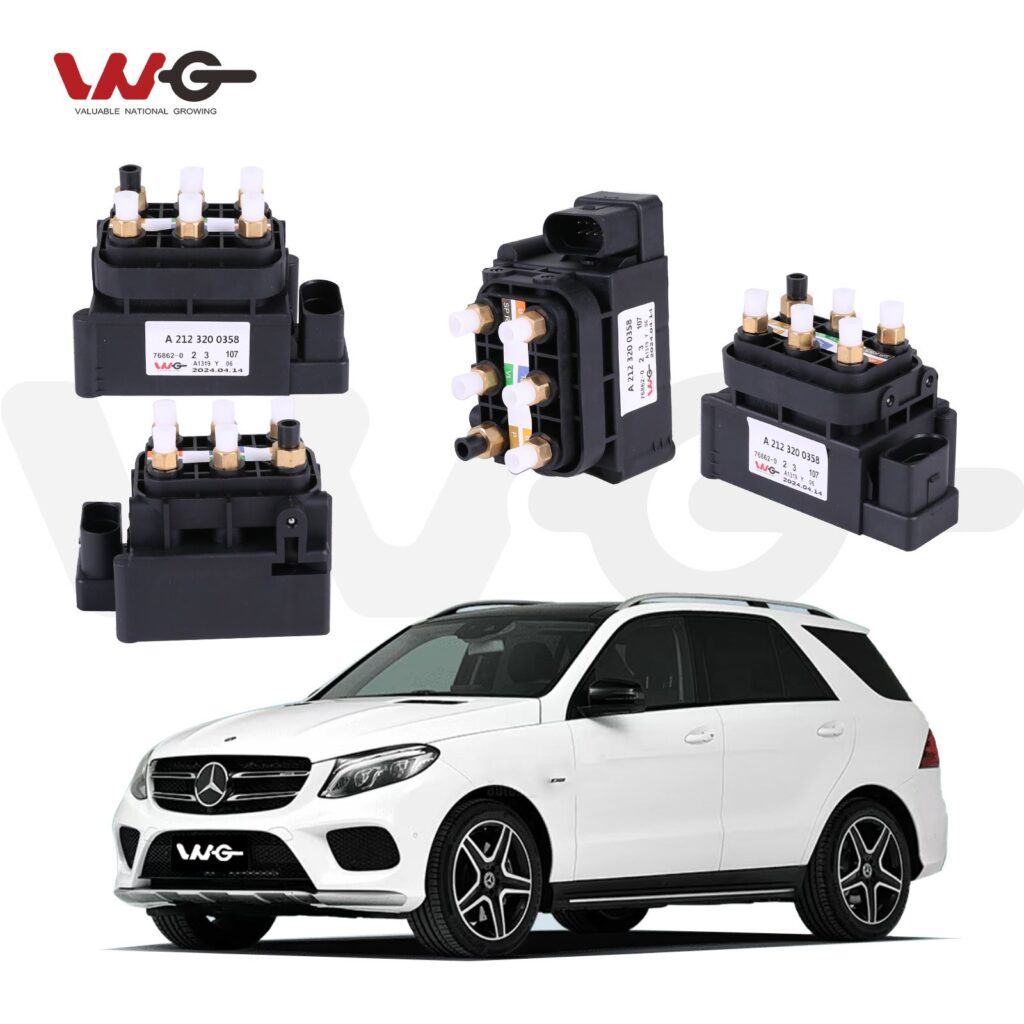
The first matching step is the OE reference number. Similar-looking units can have different internal layouts or connector positions. A close OE-style replacement should match the vehicle platform, installation position, and pneumatic routing rather than simply looking similar from the outside.
Even the same model family may use different suspension configurations by year, engine, axle setup, or electronic control package. A valve block from one vehicle variant may have different pneumatic routing, solenoid specifications, connector pinouts, or mounting dimensions and therefore may not be electrically or mechanically compatible with another variant.
Ports, Plugs, Mounting Points, and Position
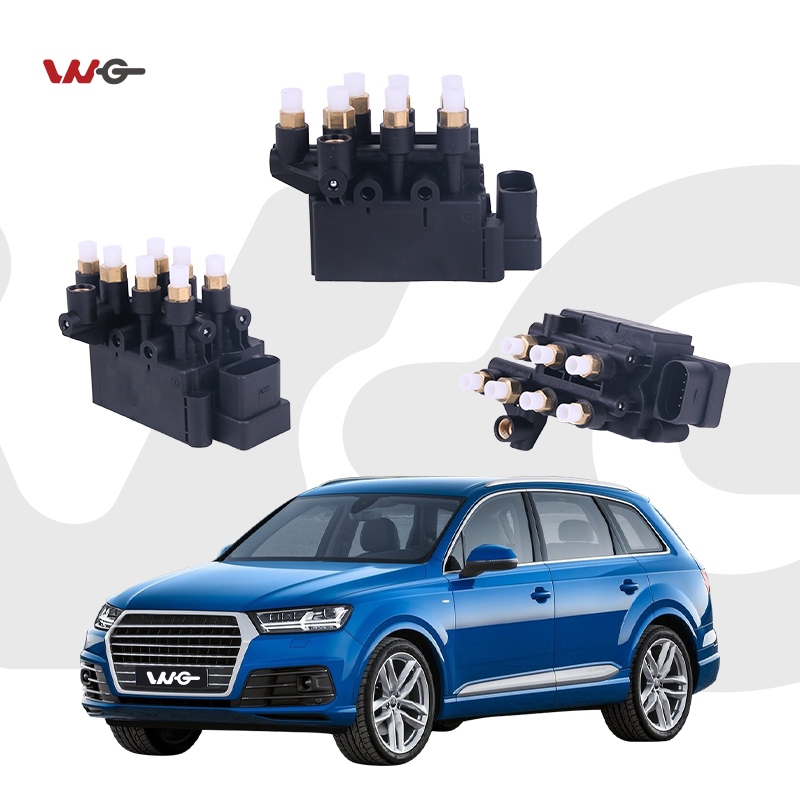
A replacement valve block should match the original part’s pneumatic port count and connection type, electrical connector and pinout, solenoid specifications, mounting points, and installation orientation. Incorrect port orientation can place excessive bending stress on the pneumatic line and fitting, increasing the risk of leakage or premature line failure. A connector that does not lock securely may develop an intermittent electrical connection under vibration, affecting solenoid actuation.
The safest replacement process is to compare the removed part with the replacement component before installation. Technicians should check air line routing, sealing surfaces, connector security, and bracket position. These details can affect sealing, durability, and reliable operation during normal vehicle use.
Product Details Buyers Should Check
Solenoid Valve Actuation and Electrical Compatibility
Each solenoid valve should actuate consistently in response to the commanded electrical signal. Delayed or inconsistent solenoid actuation can result in slow air filling, delayed pressure release, or incorrect pressure distribution between circuits. Electrical compatibility and reliable solenoid actuation are equally important because the control system depends on predictable valve actuation.
Buyers should review solenoid coil specifications, electrical connector compatibility, valve actuation performance, air-tightness test results, and pressure-cycle testing where such information is available. VNG offers application-specific aftermarket valve blocks designed as replacements for selected OE part numbers. Fitment should be confirmed by OE number and vehicle configuration before ordering.
Sealing Materials, Housing, and Leak Resistance
Sealing performance is critical to valve block reliability and pressure retention. Rubber seals, port interfaces, and housing joints must resist pressure loss over many operating cycles. A persistent leak can increase compressor operating time, contribute to premature compressor wear, and result in recurring suspension problems.
Housing material and dimensional stability are important because the valve block is exposed to vibration, temperature variation, moisture, road contamination, and repeated pressure cycling. When reviewing an air suspension valve block, check pneumatic port type and size, fitting compatibility, seal condition, connector security, and mounting integrity.
Choosing a Valve Block for a Complete Air Suspension Repair
Product Coverage for Air Suspension Systems
VNG’s product range centers on air suspension parts, especially air shock absorbers and air strut assemblies, with additional coverage for electronic shock absorbers, conventional shock absorbers, air suspension compressors, air valve blocks, air springs, and repair kits. Many suspension faults involve more than one component, so a valve block replacement may need to be considered alongside the compressor, air strut, or air spring condition.
Warranty Expectations and Practical Support
Buyers should confirm the applicable warranty period, claim requirements, and shipping responsibilities with VNG before purchase. Warranty claims may require clear photos or video showing the product identification label, relevant markings, installation condition, and the reported fault. After confirmation, VNG provides a free replacement product, while shipping cost is paid by the customer.
Clear warranty procedures can help distributors and repair shops manage post-sale quality claims more efficiently. Accurate fitment verification before installation can reduce installation errors, compatibility issues, and repeat diagnostic work.
Conclusion
A well-functioning air suspension valve block will be able to ensure that the pressure is maintained in the correct pneumatic circuits, assist in ride height control, and prevent unnecessary operation of the compressor. Selecting the appropriate valve block requires considering the OE reference, ports and plugs, sealing, and knowing the symptoms.
For application-specific aftermarket air suspension replacement parts, contact VNG for product and fitment information.
FAQ
Q: What does an air suspension valve block do?
A: An air suspension valve block distributes compressed air between the compressor, reservoir, and air springs or air struts. It uses electronically actuated solenoid valves and internal pneumatic passages to control airflow between the system’s individual circuits. When it works correctly, the vehicle can raise, lower, and hold ride height more consistently.
Q: How can I determine if the valve block is leaking air?
A: Common symptoms include one corner of the vehicle sagging after parking, slow lifting, the compressor running repeatedly, or a loss of pressure without any visible cracks in the air springs. Before replacing parts, repair shops should inspect the ports, air lines, and valve outputs and perform a leak test, as hoses and air springs can also cause similar symptoms.
Q: Can a bad valve block damage the compressor?
A: Yes. If the valve block leaks or does not close correctly, the compressor may run too often to restore lost pressure. That extra workload can increase heat and wear. Diagnosing the valve block before fitting a new compressor helps protect the wider air suspension system.